
The two most important people we added to PodPlay's go-to-market team this year came from a LinkedIn post and a customer relationship. Neither came from a job posting.
We do post jobs. But a posting has never been the thing that found us the person. What found us the person was writing — publicly, specifically, and often — about how we actually operate.
A magnet does two things. It attracts and it repels. Most companies design their public writing to do neither.
The average careers page is engineered to offend no one. Fast-paced environment. Collaborative culture. Passionate team. It is not a description of a company; it is a description of every company. Nobody reads it and thinks that's me. Nobody reads it and thinks that's definitely not me. It produces no signal in either direction, which is another way of saying it produces no candidates worth having.
Write what you actually believe and the opposite happens. Say that you run sales with closers and no SDRs, that you measure impact and not tenure, that you expect people to be intrinsically motivated because you don't believe motivation can be installed — and you have built something with polarity.
Some people read that and say hell yeah.
Most people read it and say that's not for me.
Both are wins. The second group is the one that costs you eighteen months and a bad quarter if it slips through an interview process instead of self-selecting out at the top of the funnel. The repelling is not a side effect of publishing what you believe. It is half the reason to do it.
I started posting consistently on LinkedIn in September 2023, the month we publicly launched PodPlay with a blog titled Built by Players for Players. I had about 2,500 followers and no real body of work on the platform. But I thought it was important for us to build in public to attract the right people to the project over time.
Thirty-five months later: 4.9 million impressions and 18,425 followers.
The totals are less interesting than the shape.
51,000 impressions across the back end of 2023. 391,000 in 2024. 1.4 million in 2025. 3.0 million in the first seven and a half months of 2026 — double all of last year, with four months still to go.
That is not linear growth. That's compounding. The first three months I posted produced 38,000 impressions. The last three produced 1.65 million. Same person, similar amount of work per week, forty times the reach.
There's no magic growth hack in those numbers and no marketing agency behind it. There is one input: showing up every week for three years with an actual opinion, including the long middle stretch where the numbers were small enough to make a reasonable person quit.
The audience isn't the asset. The asset is that a specific kind of person — operators, founders, high agency sellers — now has a standing invitation to figure out whether they want to work at PodPlay.
Every sales team knows the numbers: inbound converts at a materially higher rate than outbound. The reason isn't magic. An inbound lead has already done part of your job for you. They found the category, understood the problem, evaluated you against alternatives, and raised their hand. The qualification happened before the first call.
A job posting is the opposite. It's spray and pray, except you're the one holding the hose and the water comes back at you.
Post a role on a scaled platform and you can get a thousand applications. The volume feels like validation. It isn't. A posting is a broadcast to everyone currently looking, which is a population selected for availability rather than for fit. Most of that thousand didn't choose you. They chose "open roles with this title," and you were on the list. Very few of them know what you sell, who you sell it to, or why your approach is different from the other three companies they applied to that morning.
Then the bill arrives. Someone has to read a thousand applications to find the four worth a conversation. That someone is usually the person whose time is the scarcest thing the company owns. You are paying, in founder hours, to build a haystack and then search it. The needle may well be in there. It also may not be — and you don't find that out until you've spent the weeks.
Now hold that against the other kind of candidate. Someone studied your business, read your positioning, formed a view about where the company is going, and concluded they were uniquely built for a seat you may not have posted at all. One application. Pre-qualified. No haystack.
Look at what that person just demonstrated. They found the opportunity without being told it existed. They did unpaid research on a company that had made them no promises. They constructed an argument for themselves and made it to a stranger.
That is agency. And agency is at the top of the list of things we hire for at PodPlay.
You cannot interview for agency. Ask any candidate whether they're self-directed and one hundred percent of them say yes. What you can do is observe it. The act of arriving on your own is the test, and it grades itself before you've spent a minute in a room.
Derek Sivers has the cleanest version of the decision rule: if it's not a hell yeah, it's a no. He wrote it about how to spend your life. It transfers exactly to how you build a team.
High talent density is not a vibe. It's an arithmetic problem. Every person you hire resets the average, and the average sets the bar for everyone who comes next — because A players want to work with A players, and they will leave a room that stops meeting that description. One merely-fine hire doesn't cost you one merely-fine hire. It taxes every hire after it.
So the rule has to be brutal at the moment of decision. If it isn't a hell yeah, say hell no.
The problem with that rule is that it's expensive. Holding an unmissable bar means saying no far more often than you say yes, and the seat stays empty while you do it. That's exactly what the magnet solves. Publishing what you believe raises the rate at which hell-yeahs walk through the door on their own, which is what makes a brutal bar survivable in practice instead of just admirable on a slide.
Talent density is what you get when a hard bar meets a full top of funnel. Writing in public is how you fill it.
Ryan Weinbach found us through the writing. He read what we were publishing about how we sell, decided he wanted in, and came to us with a point of view about the business and why he was uniquely positioned to be involved rather than a résumé and a question. I wrote about how that happened when it happened.

When we hired him, I thought he would be better at the sales job than me over time. Turns out over time was almost immediately.
We modeled roughly a year before he'd be ready to run the sales organization. He got there in six months, and he is now PodPlay's Head of Sales.
That compression is the culture point, and it's the part I'd want a candidate to notice. We don't pay for tenure. We pay for impact, and we promote on it. A company that says that and then makes people wait their turn is lying twice — once to the person who earned it early, and once to everyone watching to see whether the stated rule is the real rule.
Sue Ellen Mang owns and operates The Courts LV, eight indoor courts in Summerlin, Las Vegas — and a PodPlay customer. Before that she spent her career as a B2B SaaS and payments seller, and an elite one. We didn’t have a position listed. But she made it impossible for me not to create one.
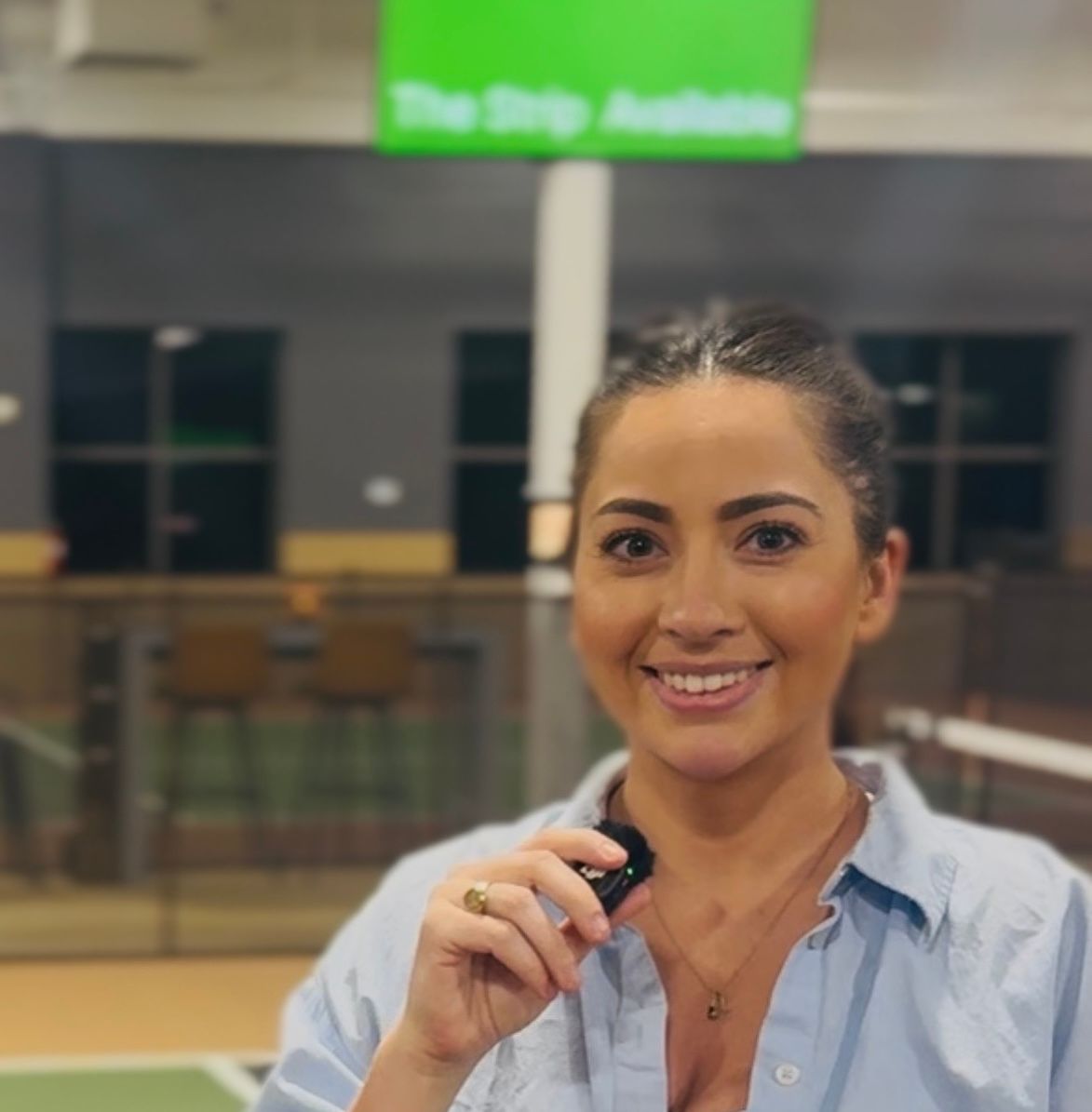
The club's motto is come for the pickleball, stay for the people. Read that again as a positioning statement. It tells you exactly what the place is for and exactly who it's for, and it makes no attempt to be for everyone. It's a magnet. She was already running the same play at her club that we run at PodPlay.
I got to know her as a customer first, which is a very good way to get to know a salesperson. From the first interaction, the read was simple: she gets it. She wasn't reacting to the product, she was reasoning about it — membership models, pricing for certainty, no-show behavior, how to get members onto tournaments and leagues. Operator problems, in operator language, unprompted.
As of August 17, Sue Ellen is PodPlay's Director of Sales.
She can demo the platform from her own club's back end on day one. Not from a sandbox with fake members in it. From a real club, with real members, and real revenue running through it. There is no version of sales enablement that manufactures that.
And she believes in building in public too. She'll be writing a series chronicling what it's actually like to build The Courts LV on PodPlay — the decisions, the mistakes, the numbers. Our whole thesis is operators building for operators. It's hard to think of a sharper expression of it than our newest hire being an operator who writes.
Which is how the loop closes. The writing attracts the people. The people write. That's the flywheel — the same shape as every other one worth having.
For anyone looking: the best jobs aren't posted, because the best seats get created around the person who showed up already qualified. Go find the companies that publish what they think. Read enough to have a real view. Then make the case nobody asked you to make.
For anyone hiring: you cannot recruit inbound if there is nothing to be inbound to. A careers page is not a magnet. A body of work is.
Write what you believe. Publish it. Let it sort.
If it isn't a hell yeah, say hell no.
More than 400,000 end customer accounts have moved to PodPlay from other club software as of October 2026. Here are the seven reasons clubs migrate, and the arithmetic behind the switch.
Oct 16, 2026
How one Las Vegas club owner sold court, wall and replay sponsorships to local businesses: what to sell, which verticals to call, and what to charge.
Oct 1, 2026
We only use cookies for necessary navigation of our website, performance tracking, or third party vendors. Our cookie tracking is used to better serve our users and users' interests.